
Internal Management System
WiManager
WiManager
Designing an internal operations platform for Wicode — combining a Kanban sales pipeline, HR management, payroll tracking, and KPI dashboards into a single tool for leadership and operations teams.
Designing an internal operations platform for Wicode — combining a Kanban sales pipeline, HR management, payroll tracking, and KPI dashboards into a single tool for leadership and operations teams.
Year
Year
2024
2024
Role
Role
UX/UI Designer
UX/UI Designer
Tools
Tools
Figma
Figma
Audience
Audience
Wicode leadership & HR
Wicode leadership & HR
The Problem
Wicode's internal operations were running across disconnected tools — project tracking in one place, HR management in another, and financial KPIs being calculated manually. The lack of a unified system created blind spots for leadership and unnecessary administrative overhead for the operations team.
Wi Manager was designed to consolidate these workflows: a Kanban pipeline tracking leads from first contact to closed deal, an HR module for personnel management and payroll, and a KPI dashboard giving leadership a real-time view of team performance.
Wicode's internal operations were running across disconnected tools — project tracking in one place, HR management in another, and financial KPIs being calculated manually. The lack of a unified system created blind spots for leadership and unnecessary administrative overhead for the operations team.
Wi Manager was designed to consolidate these workflows: a Kanban pipeline tracking leads from first contact to closed deal, an HR module for personnel management and payroll, and a KPI dashboard giving leadership a real-time view of team performance.
Wicode's internal operations were running across disconnected tools — project tracking in one place, HR management in another, and financial KPIs being calculated manually. The lack of a unified system created blind spots for leadership and unnecessary administrative overhead for the operations team.
Wi Manager was designed to consolidate these workflows: a Kanban pipeline tracking leads from first contact to closed deal, an HR module for personnel management and payroll, and a KPI dashboard giving leadership a real-time view of team performance.
My Role
As part of the Wicode team — and as an internal user of the operations workflows the tool needed to support — I designed the full system in Figma, defining the information architecture, interaction patterns, and visual language for all modules. Being embedded in the team gave me firsthand insight into the real workflows, which allowed me to validate design decisions against actual day-to-day operations rather than assumptions.
As part of the Wicode team — and as an internal user of the operations workflows the tool needed to support — I designed the full system in Figma, defining the information architecture, interaction patterns, and visual language for all modules. Being embedded in the team gave me firsthand insight into the real workflows, which allowed me to validate design decisions against actual day-to-day operations rather than assumptions.
As part of the Wicode team — and as an internal user of the operations workflows the tool needed to support — I designed the full system in Figma, defining the information architecture, interaction patterns, and visual language for all modules. Being embedded in the team gave me firsthand insight into the real workflows, which allowed me to validate design decisions against actual day-to-day operations rather than assumptions.
Process
Workflow Mapping
Workflow Mapping
01
Documented existing processes for sales, HR, and reporting — identifying where information was being lost or duplicated.
Documented existing processes for sales, HR, and reporting — identifying where information was being lost or duplicated.
IA Design
IA Design
02
Defined the module structure and navigation system to support different user roles: sales, HR, and executive.
Defined the module structure and navigation system to support different user roles: sales, HR, and executive.
Component Design
Component Design
03
Built a unified design system for the platform covering tables, Kanban boards, forms, KPI widgets, and dashboards.
Built a unified design system for the platform covering tables, Kanban boards, forms, KPI widgets, and dashboards.
Screen Design
Screen Design
04
Designed all modules: lead Kanban, deal detail, HR directory, payroll view, and KPI dashboard.
Designed all modules: lead Kanban, deal detail, HR directory, payroll view, and KPI dashboard.
Key Choices
Kanban as the primary sales view
Kanban as the primary sales view
Sales stages from lead to closed deal map naturally to a Kanban structure. The board gives sales and leadership a shared mental model of pipeline health at a glance, replacing status update meetings.
Sales stages from lead to closed deal map naturally to a Kanban structure. The board gives sales and leadership a shared mental model of pipeline health at a glance, replacing status update meetings.
Sales stages from lead to closed deal map naturally to a Kanban structure. The board gives sales and leadership a shared mental model of pipeline health at a glance, replacing status update meetings.
Role-based module visibility
Role-based module visibility
Not all users need all modules. The navigation was designed to show only the modules relevant to each role — reducing cognitive load and preventing access to sensitive HR or financial data by unauthorized users.
Not all users need all modules. The navigation was designed to show only the modules relevant to each role — reducing cognitive load and preventing access to sensitive HR or financial data by unauthorized users.
Not all users need all modules. The navigation was designed to show only the modules relevant to each role — reducing cognitive load and preventing access to sensitive HR or financial data by unauthorized users.
KPI widgets designed for decision-making, not decoration
KPI widgets designed for decision-making, not decoration
Dashboard metrics were selected based on what leadership actually needed to make decisions, not what was technically easy to display. Each widget answers a specific operational question.
Dashboard metrics were selected based on what leadership actually needed to make decisions, not what was technically easy to display. Each widget answers a specific operational question.
Dashboard metrics were selected based on what leadership actually needed to make decisions, not what was technically easy to display. Each widget answers a specific operational question.

The Result
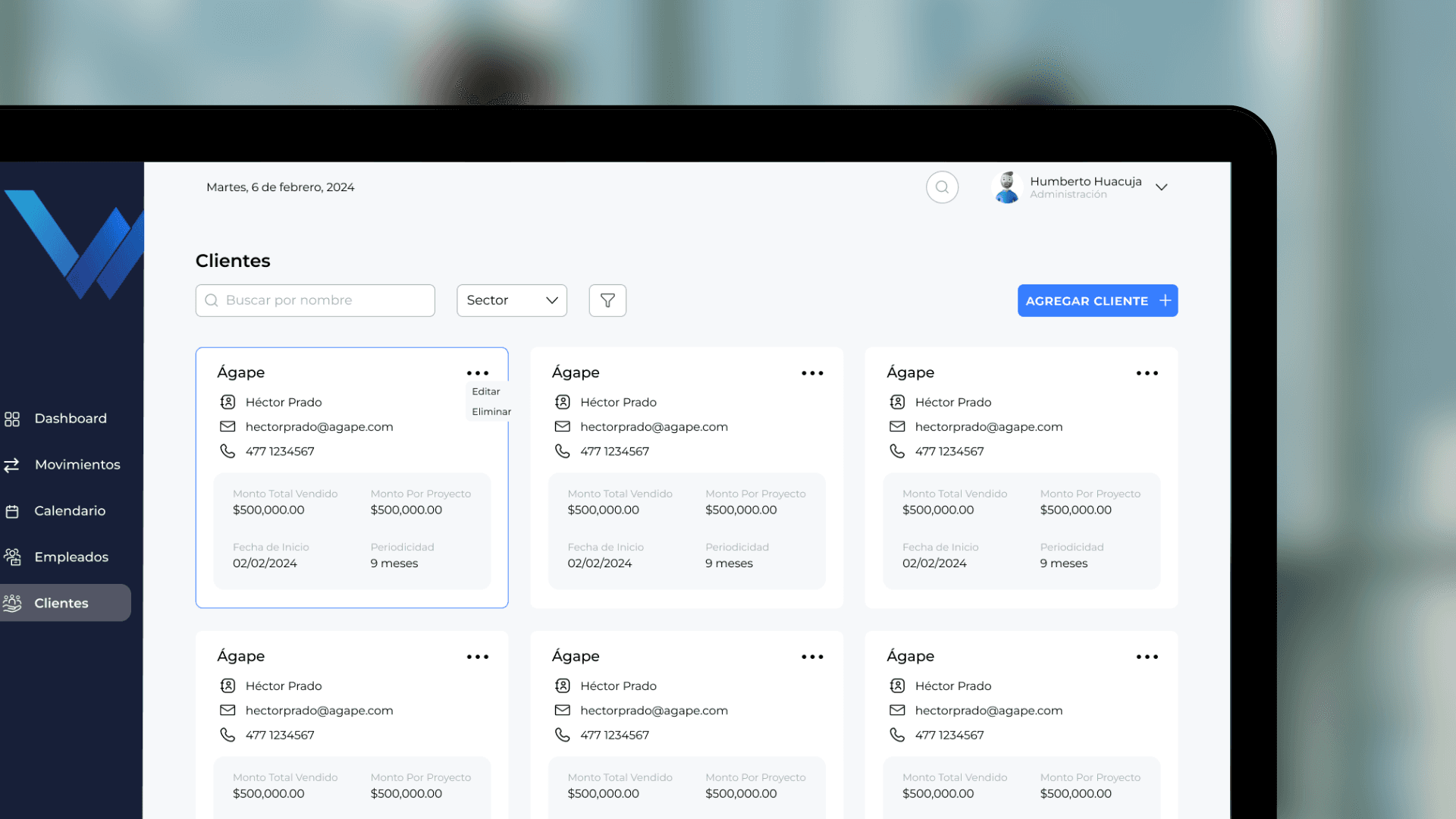
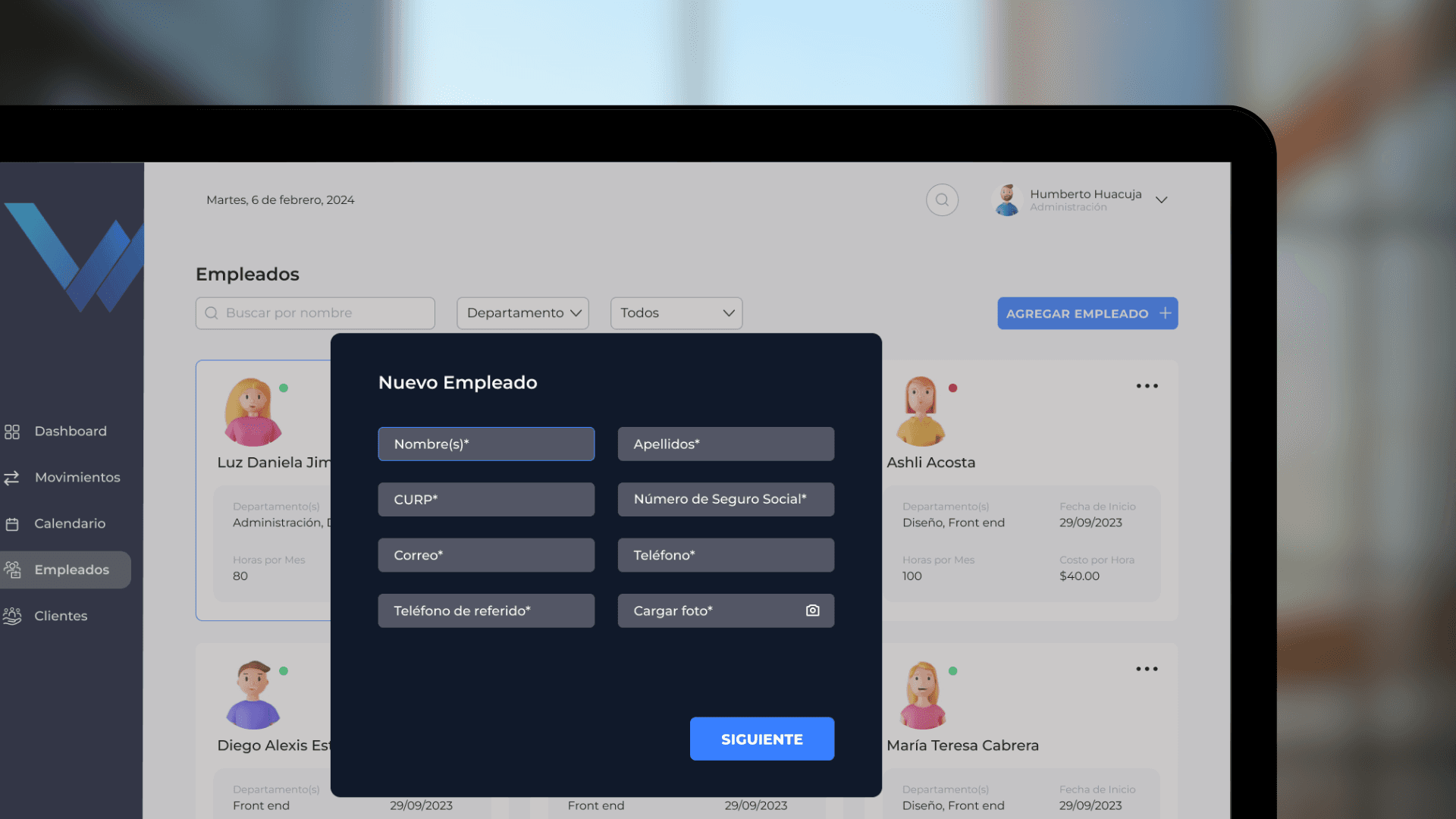
A comprehensive internal management platform with four core modules: sales Kanban pipeline, deal management, HR personnel management, and executive KPI dashboards — all connected within a single, unified interface.
A comprehensive internal management platform with four core modules: sales Kanban pipeline, deal management, HR personnel management, and executive KPI dashboards — all connected within a single, unified interface.
A comprehensive internal management platform with four core modules: sales Kanban pipeline, deal management, HR personnel management, and executive KPI dashboards — all connected within a single, unified interface.
Outcome
Designing for your own team is one of the most revealing experiences in UX work. You can't hide behind assumptions — you know exactly whether the design solves the real problem because you live the problem yourself.
Wi Manager demonstrated the operational value of bringing scattered workflows into a single system: fewer context switches, clearer accountability, and better data for decision-making at the leadership level.
Designing for your own team is one of the most revealing experiences in UX work. You can't hide behind assumptions — you know exactly whether the design solves the real problem because you live the problem yourself.
Wi Manager demonstrated the operational value of bringing scattered workflows into a single system: fewer context switches, clearer accountability, and better data for decision-making at the leadership level.
Designing for your own team is one of the most revealing experiences in UX work. You can't hide behind assumptions — you know exactly whether the design solves the real problem because you live the problem yourself.
Wi Manager demonstrated the operational value of bringing scattered workflows into a single system: fewer context switches, clearer accountability, and better data for decision-making at the leadership level.